
OpenAI, Musk, and the AI Duopoly
A long-form analysis of the legal, financial, and strategic forces shaping the frontier AI market — and why the outcome matters beyond two companies.
This article reflects personal analysis and interpretation based on publicly available information as of May 2026. It is not legal, financial, or investment advice.
This conversation traces one of the most consequential corporate and legal dramas in the history of technology — and explains why the outcome matters to anyone with money in the market, a job in tech, or simply a phone in their pocket.
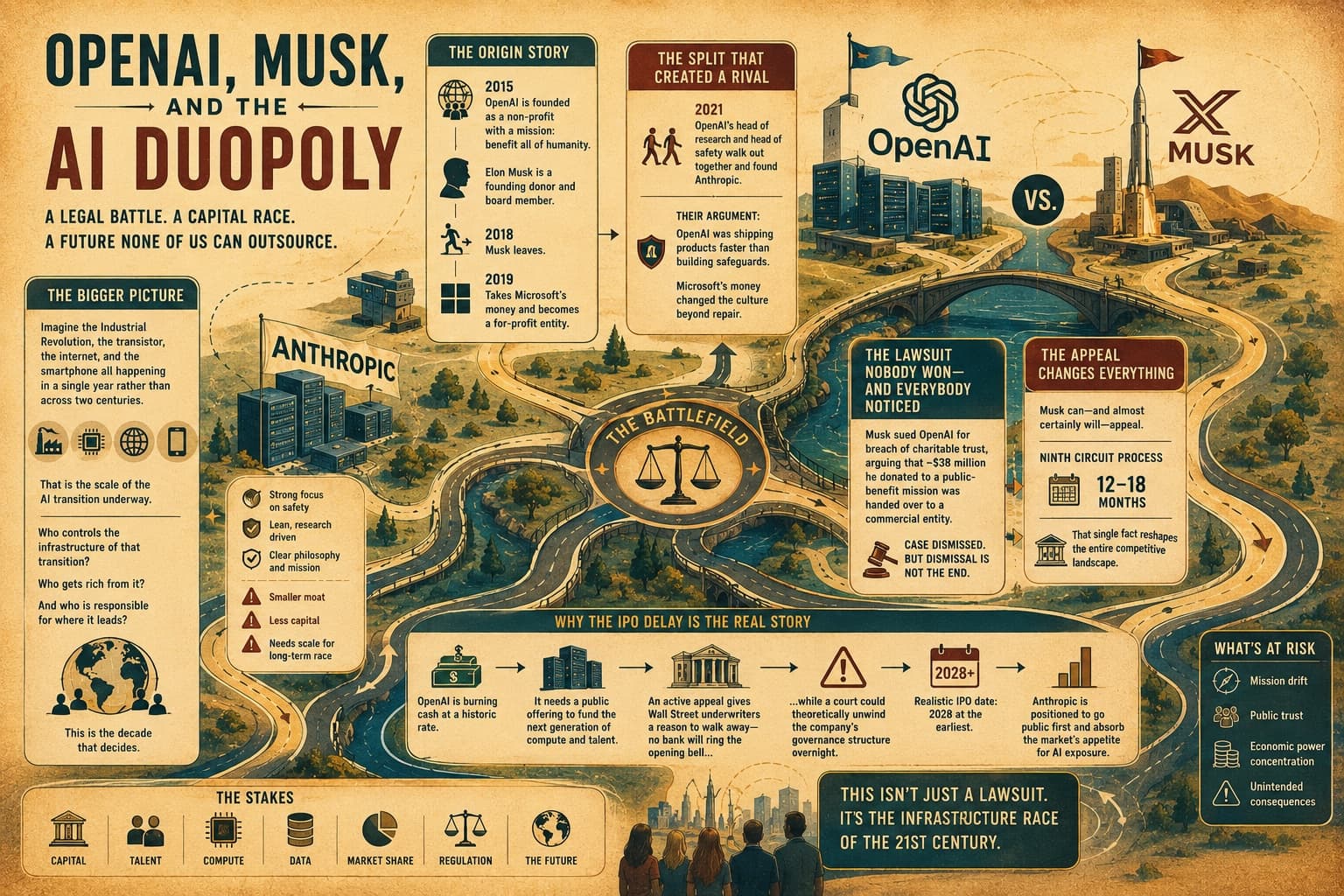
The origin story. OpenAI was born in 2015 as a non-profit with a noble mission: make sure artificial general intelligence benefits everyone, not just whoever builds it first. Elon Musk was a founding donor and board member. He left in 2018. In 2019, the organization took Microsoft’s money and transformed into a commercial entity. That transformation is the legal and moral fault line at the center of everything that follows.
The split that created a rival. In 2021, OpenAI’s head of research and head of safety walked out together and founded Anthropic — now OpenAI’s most direct competitor. Their argument: OpenAI was shipping products faster than it was building safeguards, and Microsoft’s money had changed the culture beyond repair. The conversation explores what Anthropic got right, what it got wrong, and what genuine risks it still carries heading into its own IPO.
The lawsuit nobody won — and everybody noticed. Musk sued OpenAI for breach of charitable trust, arguing that approximately $38 million he donated to a public-benefit mission was handed over to a commercial entity. The case was dismissed — but dismissal is not the end. Musk can appeal. The Ninth Circuit process can take 12–18 months. That single fact reshapes the competitive landscape.
Why the IPO delay is the real story. OpenAI is burning cash at a historic rate. It needs a public offering to fund the next generation of compute and talent. An active appeal gives Wall Street underwriters a reason to hesitate — no bank wants to ring the opening bell while a court could theoretically unwind the company’s governance structure. The conversation explains why this may push a realistic IPO date further out, what that costs OpenAI operationally, and how Anthropic may be positioned to go public first and absorb the market’s appetite for AI exposure.
The bigger picture. Imagine the Industrial Revolution, the transistor, the internet, and the smartphone all happening in a single year rather than across two centuries. That is the scale of the AI transition underway. This conversation is not just about two companies and one lawsuit — it is about who controls the infrastructure of that transition, who gets rich from it, and whether the people building it bear any responsibility for where it leads.
Read it as a briefing on the forces shaping the next decade.
Full briefing
This summary introduces the main argument. The full PDF includes the complete conversation format, the OpenAI vs. Anthropic comparison, the IPO timing discussion, and the strategic consequences for the AI market.
Download full briefing